-
NuBlue Plus Kentucky Bluegrass Seeds
NuBlue Plus Kentucky Bluegrass is a premium turfgrass from Jacklin USA, now part of Barenbrug, exclusively imported in India by Agricare Corporation. Rich green colour with...
Regular price ₹ 300Sale price ₹ 300 Regular priceUnit price per₹ 499 -
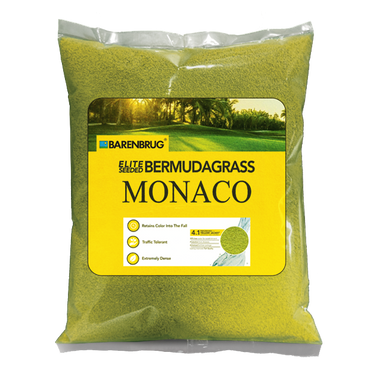
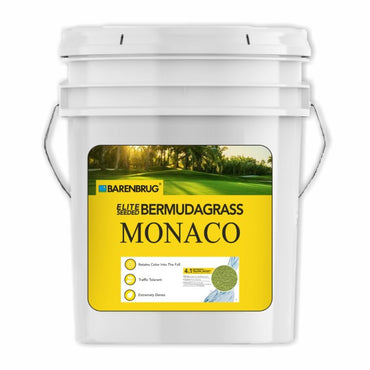
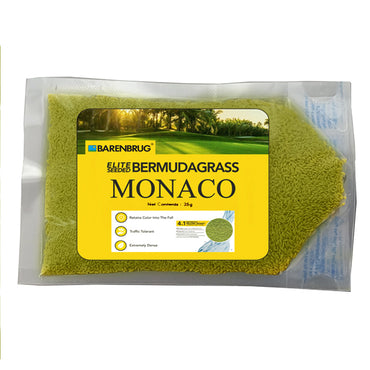
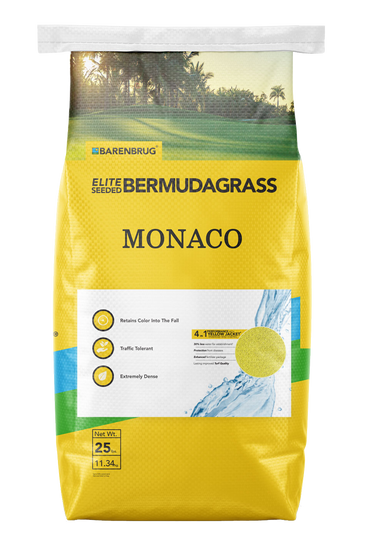
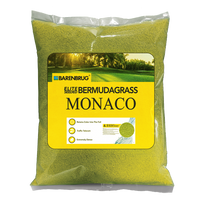
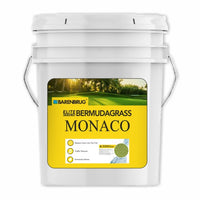
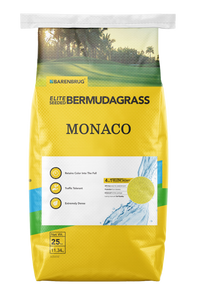
Monaco - Elite Seeded Bermudagrass
Monaco - Elite Seeded Bermudagrass by Barenbrug is a high-demand, drought-resilient turf solution known for its superior density, rich dark green colour and unmatched performance in...
Regular price ₹ 3,500Sale price ₹ 3,500 Regular priceUnit price per₹ 4,550 -
PanAm
Improved Bermudagrass Blend Yellow Jacket® enhanced for fast germination, early establishment and ease of handling when seeded Ideal for the improvement of older common bermudagrass turf and...
Regular price ₹ 300Sale price ₹ 300 Regular priceUnit price per₹ 499
Bermuda Grass Seeds in India | Buy Premium Lawn and Turf Grass Seed Online
Bermudagrass is India's most popular warm-season lawn grass — valued for its exceptional heat and drought tolerance, dense low-growing habit, and rapid recovery from wear. Whether you are establishing a new residential lawn, renovating a sports turf, or seeding a landscaping project, Agricare Corp offers premium certified bermuda grass seeds from leading international brands like PanAm Seeds — engineered for consistent germination, uniform coverage, and a dense, deep-green finish.
Why Bermudagrass Is Ideal for Indian Conditions
- High heat tolerance — thrives in temperatures up to 38 to 42 degrees C, common across Indian summers
- Exceptional drought resistance once established — lower irrigation requirement than cool-season grasses
- Fast germination — 7 to 14 days under optimal conditions (25 to 35 degrees C soil temperature)
- Dense, aggressive growth — fills in bare patches quickly and crowds out weeds
- Wear tolerance — handles foot traffic well, making it suitable for residential lawns, parks, and sports fields
- Good recovery — self-repairs damage through stolons and rhizomes without reseeding
How to Establish a Bermuda Grass Lawn from Seed
- Soil preparation: Till the top 10 to 15 cm, remove weeds, and level the surface before seeding.
- Seeding rate: Apply 2 to 4 kg of bermuda grass seed per 1000 sq ft for new lawns; 1 to 2 kg for overseeding thin patches.
- Seed depth: Sow at a shallow depth of 3 to 5 mm — bermuda grass seeds need light for germination. Do not bury deeply.
- Watering: Keep the seedbed consistently moist for the first 2 to 3 weeks. Water lightly 2 to 3 times daily until germination.
- First mow: Mow for the first time when the grass reaches 4 to 5 cm height. Set the mower at 2.5 to 3 cm cutting height.
Coated vs Uncoated Bermuda Grass Seed
Coated bermuda grass seeds have a polymer or clay coating that improves seed-to-soil contact, retains moisture around the seed, and can include starter nutrients. Coated seeds are easier to spread evenly using a fertiliser spreader and tend to show more uniform germination, particularly in dry or exposed soil conditions. Uncoated seeds are suitable for ideal conditions with good seedbed preparation and reliable irrigation.
Seeding Rate and Setup Guide
| Application | Area | Seed Quantity Required | Watering Frequency (First 3 Weeks) |
|---|---|---|---|
| New lawn establishment (bare ground) | Per 1000 sq ft | 2 to 4 kg | 2 to 3 times daily, 5 to 10 min each |
| Overseeding thin or patchy lawn | Per 1000 sq ft | 1 to 2 kg | Once daily until germination confirmed |
| Sports field or large turf area | Per acre | 20 to 40 kg | Irrigation system recommended |
| Full lawn renovation (strip and reseed) | Per 1000 sq ft | 3 to 4 kg | 2 to 3 times daily until establishment |
Coated vs Uncoated Bermuda Grass Seed — Comparison
| Feature | Coated Bermuda Grass Seed | Uncoated Bermuda Grass Seed |
|---|---|---|
| Germination Speed | Slightly faster — coating retains moisture around the seed | Standard germination rate (7 to 14 days) |
| Seed-to-Soil Contact | Improved — coating bonds to soil surface | Standard — depends on seedbed preparation quality |
| Spreading Method | Easier via rotary spreader (uniform distribution) | Manual or spreader — both work well |
| Best For | Dry or exposed seedbeds; less-than-ideal irrigation conditions | Well-prepared seedbeds with reliable irrigation |
| Price | Slightly higher per kg (coating adds to cost) | More economical per kg |
Cross-Sell: Complete Lawn Establishment Kit
Complete Lawn Establishment Bundle — Seed + Spreader + Turf Care
- Bermuda Grass Seed — PanAm certified, coated or uncoated
- Rotary Fertiliser Spreader — for accurate, calibrated seed distribution
- Turf Roller — to press seed into the seedbed for better soil contact after sowing
- Slow Release NPK — incorporate into the seedbed for establishment-period nutrition
Everything you need for a successful new lawn from seed — from soil prep to first mow.
Buying Preference
Frequently Asked Questions
Q: When is the best time to plant bermuda grass seed in India?
A: The optimal sowing time is late February to April (spring) or August to September (early post-monsoon) when soil temperatures are warm — ideally between 25 and 35 degrees C. Avoid sowing during peak summer (May to June) when intense heat can dry out the seedbed.
Q: How long does bermuda grass seed take to germinate?
A: Under optimal conditions (soil temperature 25 to 35 degrees C, consistent moisture), bermuda grass seeds typically germinate in 7 to 14 days. Coated varieties may germinate slightly faster due to improved moisture retention. At cooler temperatures below 20 degrees C, germination can take 3 to 4 weeks or may not occur at all.
Q: What is the seeding rate for bermuda grass in India?
A: For new lawn establishment from bare ground, the recommended rate is 2 to 4 kg per 1000 sq ft (approximately 20 to 40 kg per acre). For overseeding an existing thin lawn, use 1 to 2 kg per 1000 sq ft.
Q: How much water does bermuda grass need after seeding?
A: During establishment (first 2 to 3 weeks), keep the seedbed consistently moist with light, frequent irrigation — 2 to 3 times daily for 5 to 10 minutes each session. Once fully established (6 to 8 weeks), bermudagrass is drought-tolerant and typically requires watering only 2 to 3 times per week.
Q: Can bermuda grass grow in shade?
A: Bermudagrass requires full sun to perform well — it needs at least 6 to 8 hours of direct sunlight daily. For heavily shaded lawns or gardens, alternative shade-tolerant species such as St. Augustine grass or tall fescue are better suited.
Related Collections
- Looking for a fine-textured golf green grass? Browse creeping bentgrass seed
- For cooler climates or winter overseeding — explore perennial ryegrass
- Achieve even seed distribution with a rotary spreader
- Rollers, aerators, and sweepers for lawn establishment and care
- Efficient irrigation and chemical application for large turf areas